Christmas Scenes at Glyndebourne: Winter Berries and Songbirds
On the 16th of July, I went to Glyndebourne for the dress rehearsal of Ariadne auf Naxos. I went on my own, which I really love sometimes. You can pay homage to the music, the performance and the stage. You can really focus, give it your full attention, and enjoy it and think about it without distractions.
At the interval, I met Phillipa MacDermott, Head of Retail and Product Development at Glyndebourne. We had an informal meeting, and she told me that she was proposing that, for the winter season, I create some Christmas designs for Glyndebourne
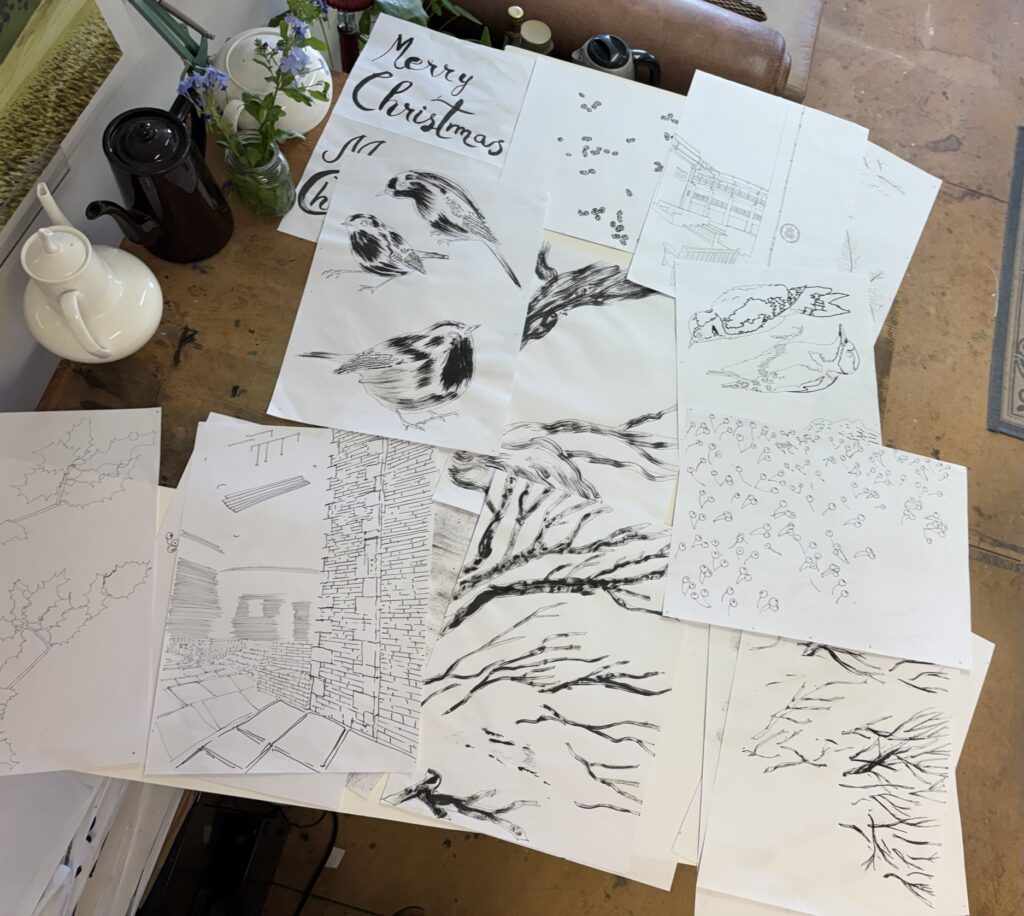
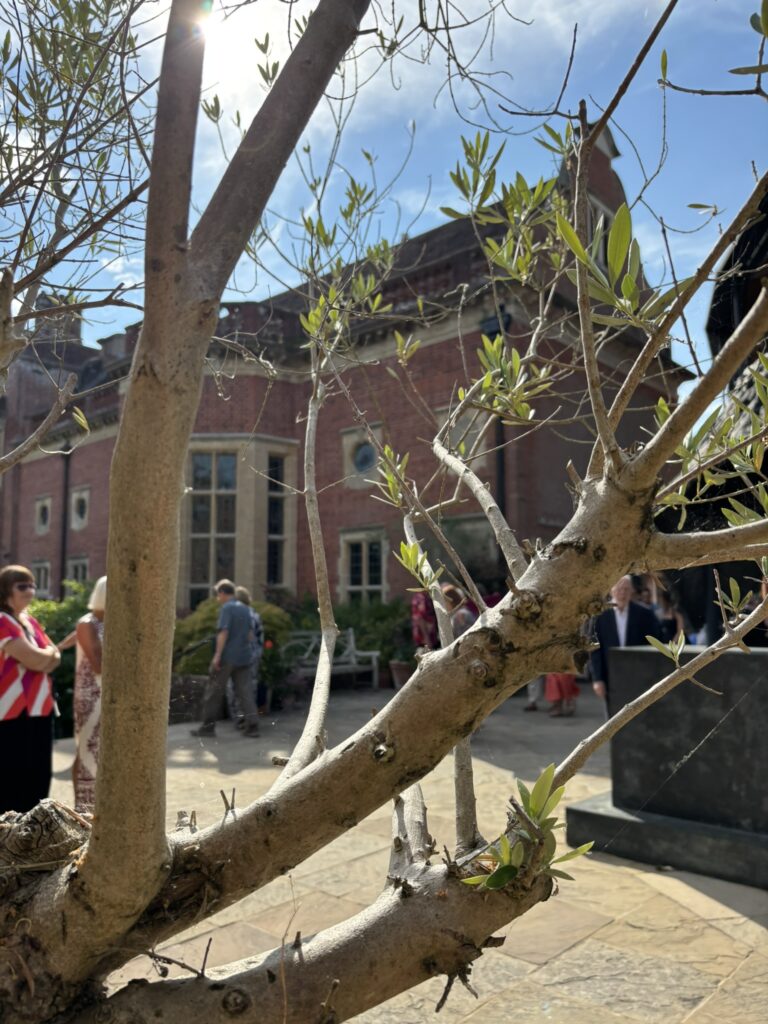
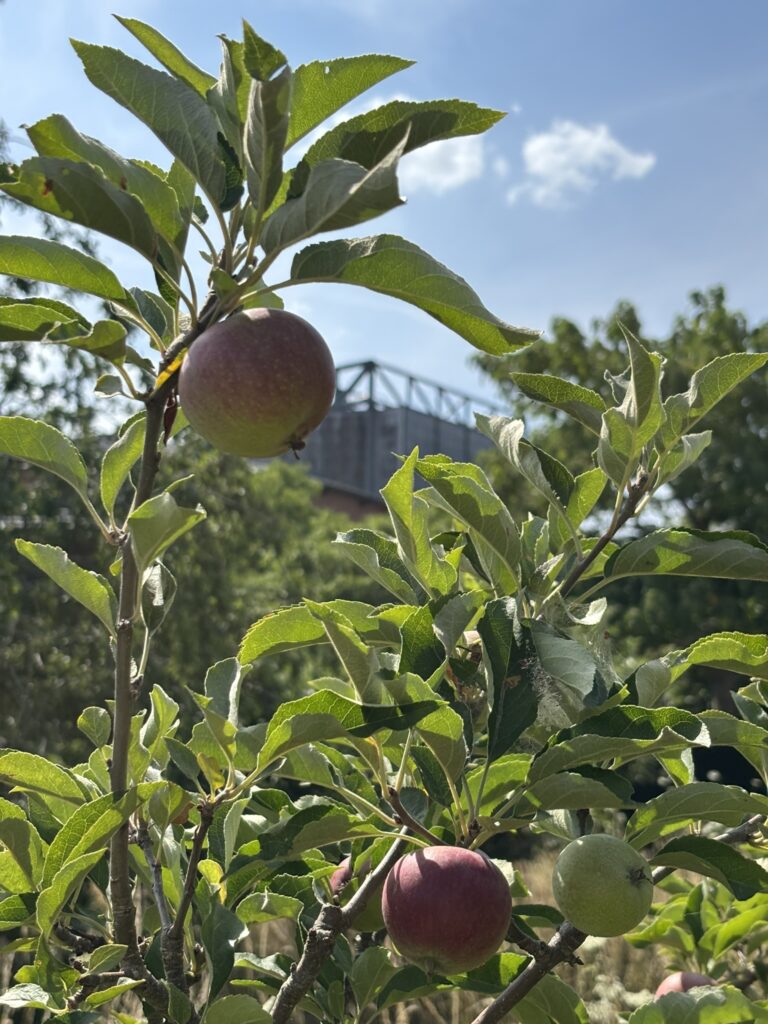
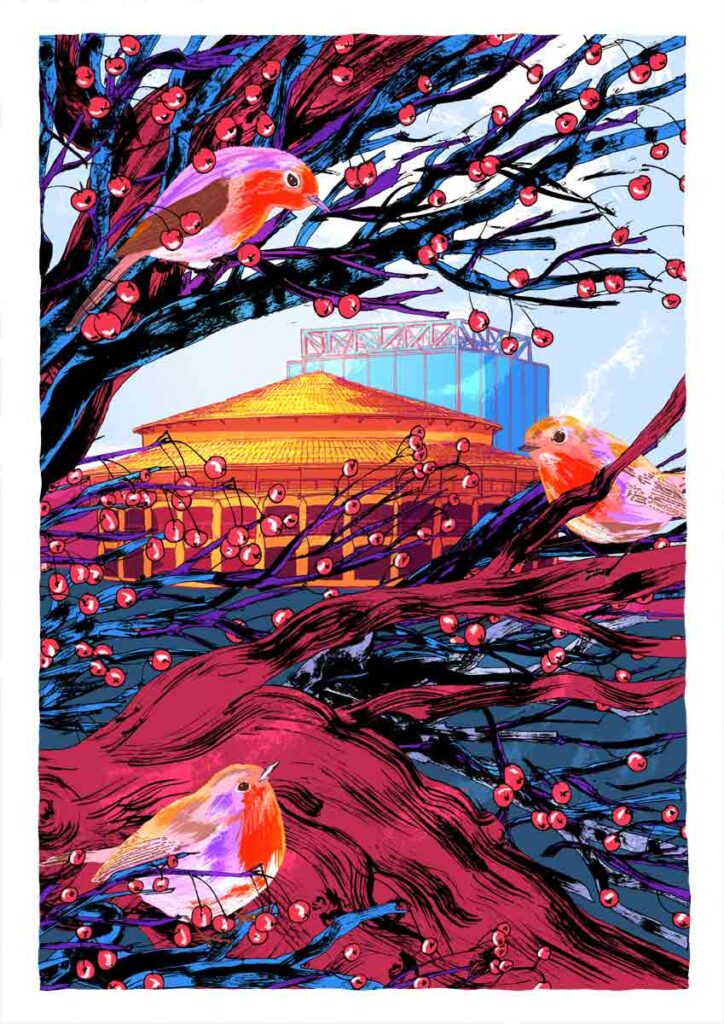
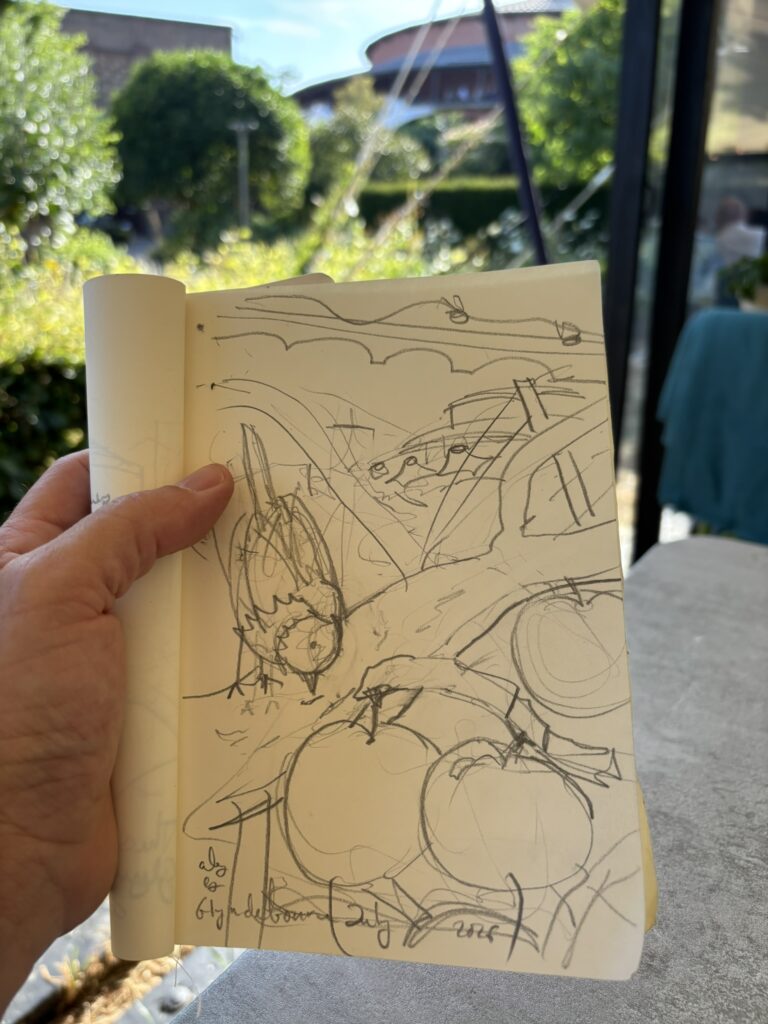
Before the performance started I went for a walk around the gardens, looking for locations and inspiration. Obviously, the brief was about a Christmas message as penciled out with Philippa before around winter berries and winter songbirds
So I thought: let’s look at the trees, the bushes and the plants. Let’s see what you can see through them. Put yourself in the perspective of these birds as they go foraging for food.
Then I went to see the opera, which, by the way, I thought was absolutely mesmerising.
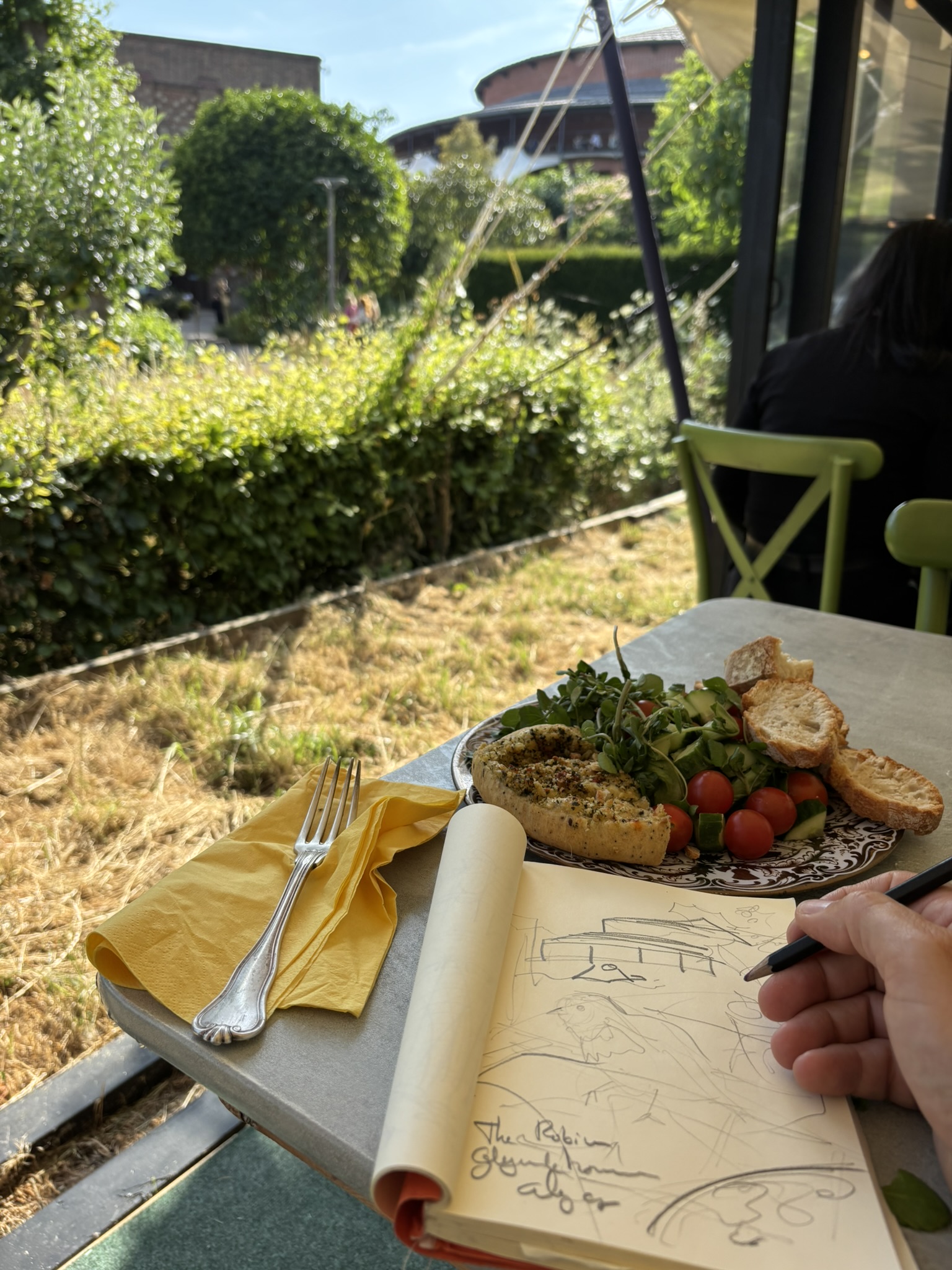
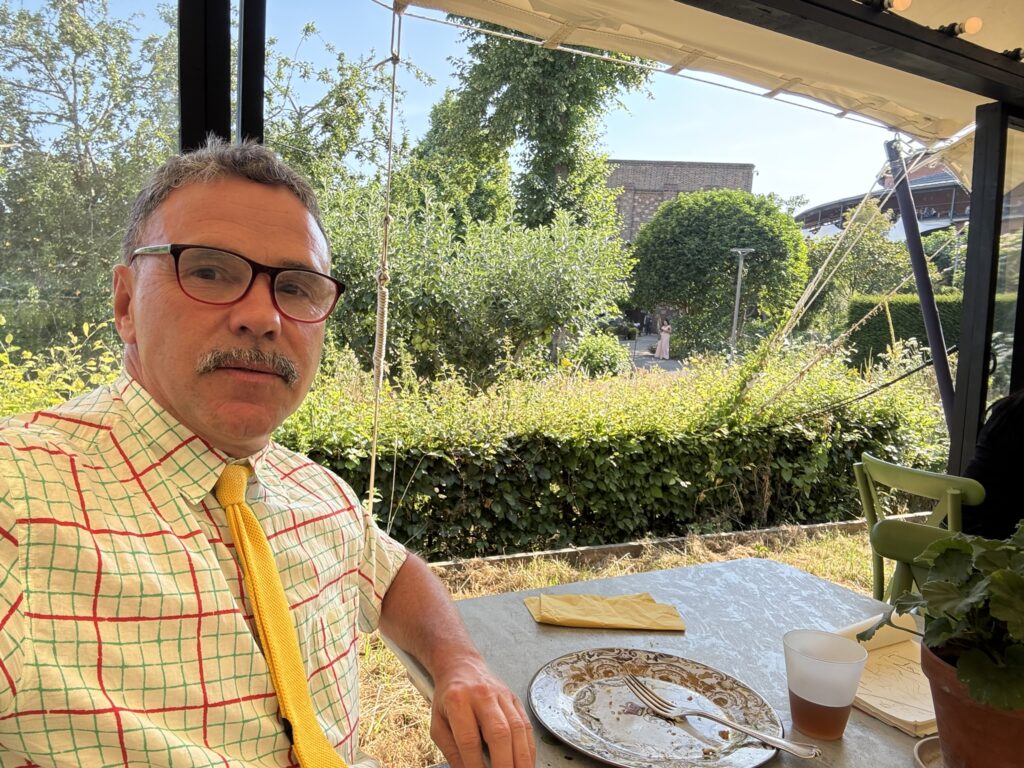
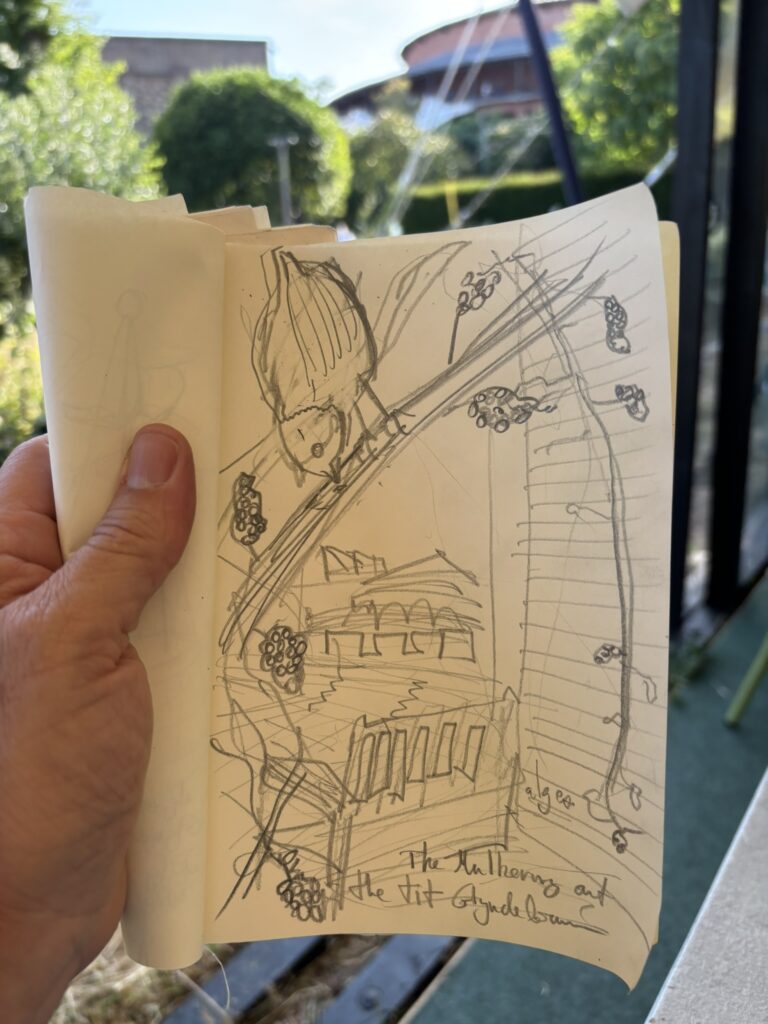
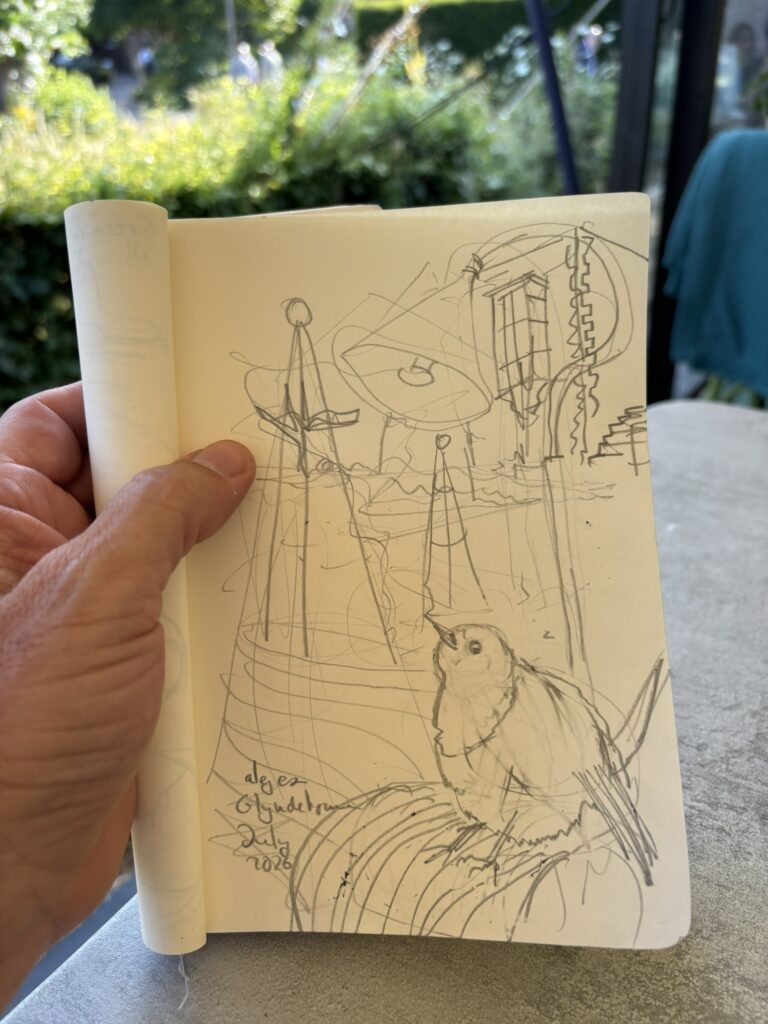
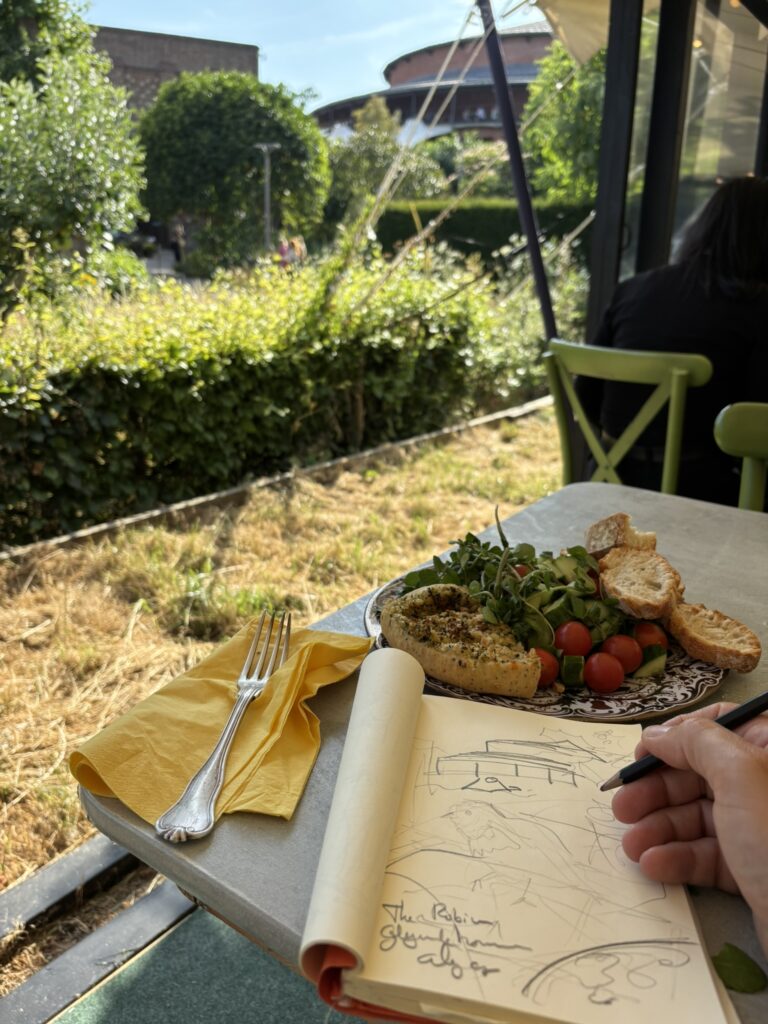
During the interval, I sat in the marquee with the picnic I had brought from home and started sketching out ideas.
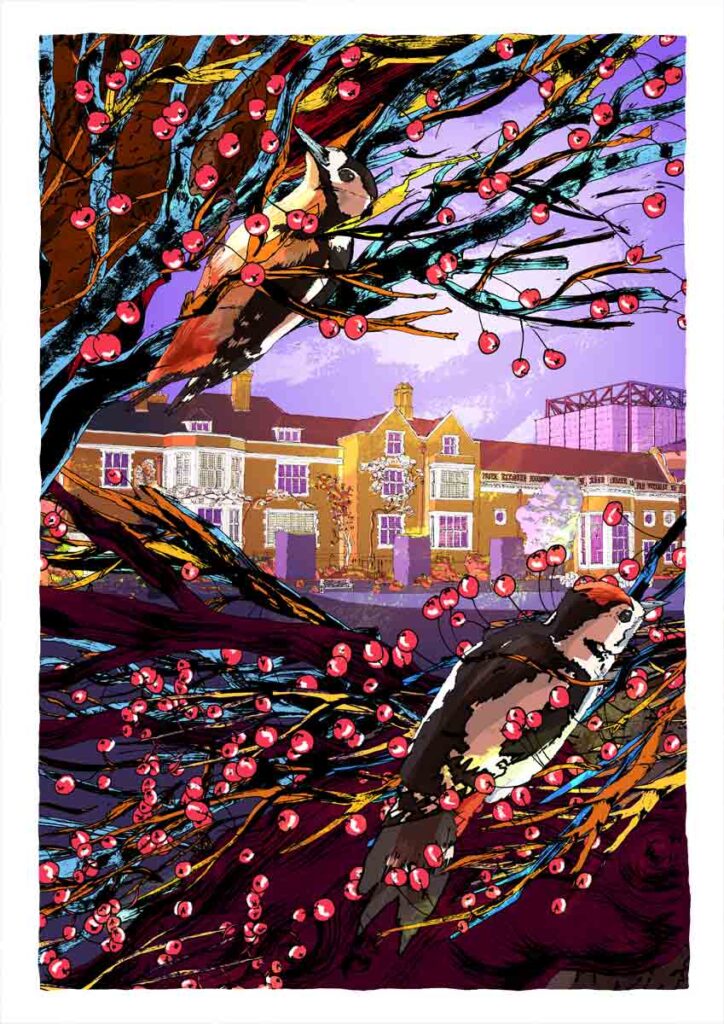
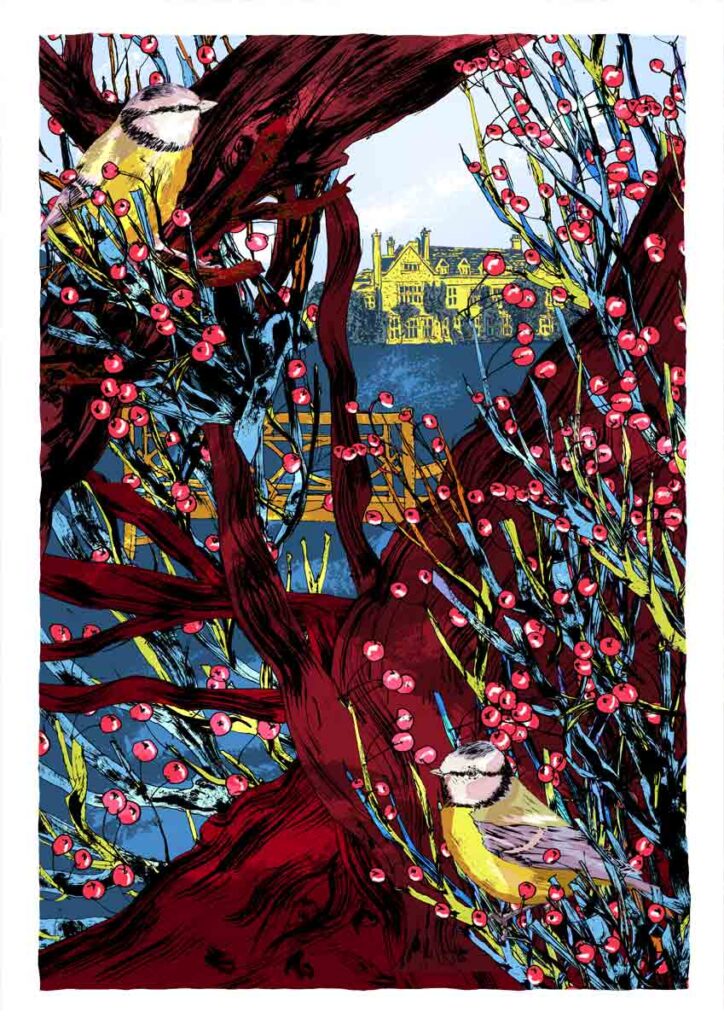
Through the thicket, often, another landscape appears. In this case, it is Glyndebourne. Sometimes you see the Main House. Sometimes the Production Hub. Sometimes the auditorium. All of them are really wonderful pieces of architecture.
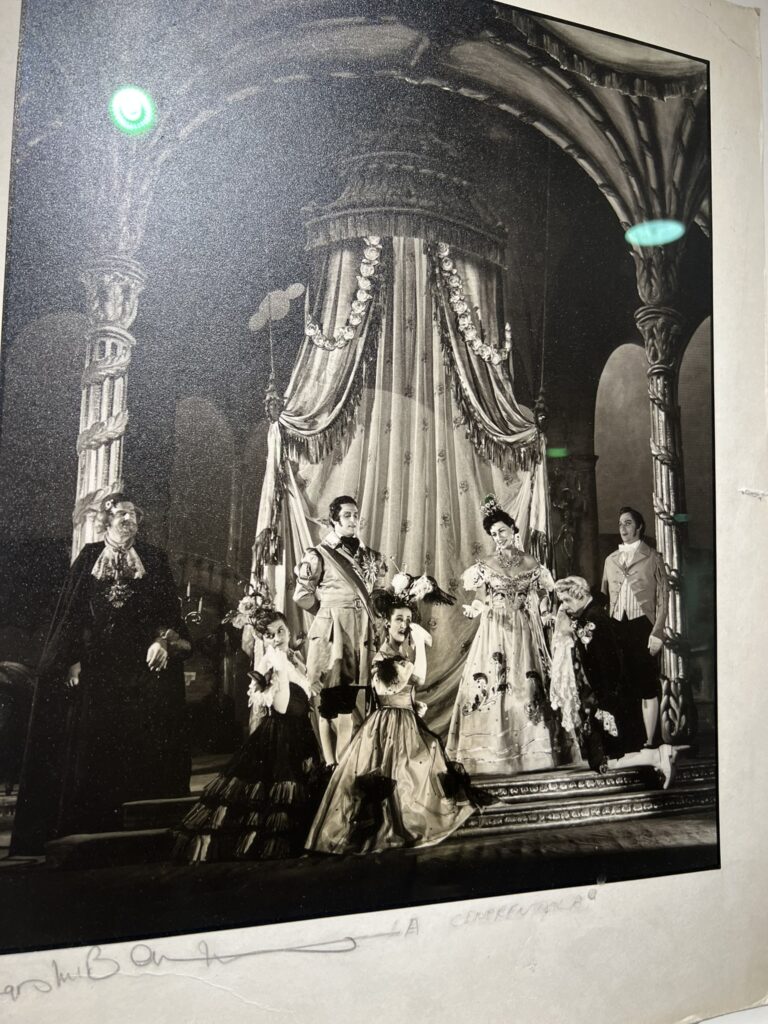
As inspiration, there was also an exhibition at Glyndebourne, in the auditorium, about Oliver Messel. I think this probably informed my designs too, with its theatricality and its over-the-top designs.
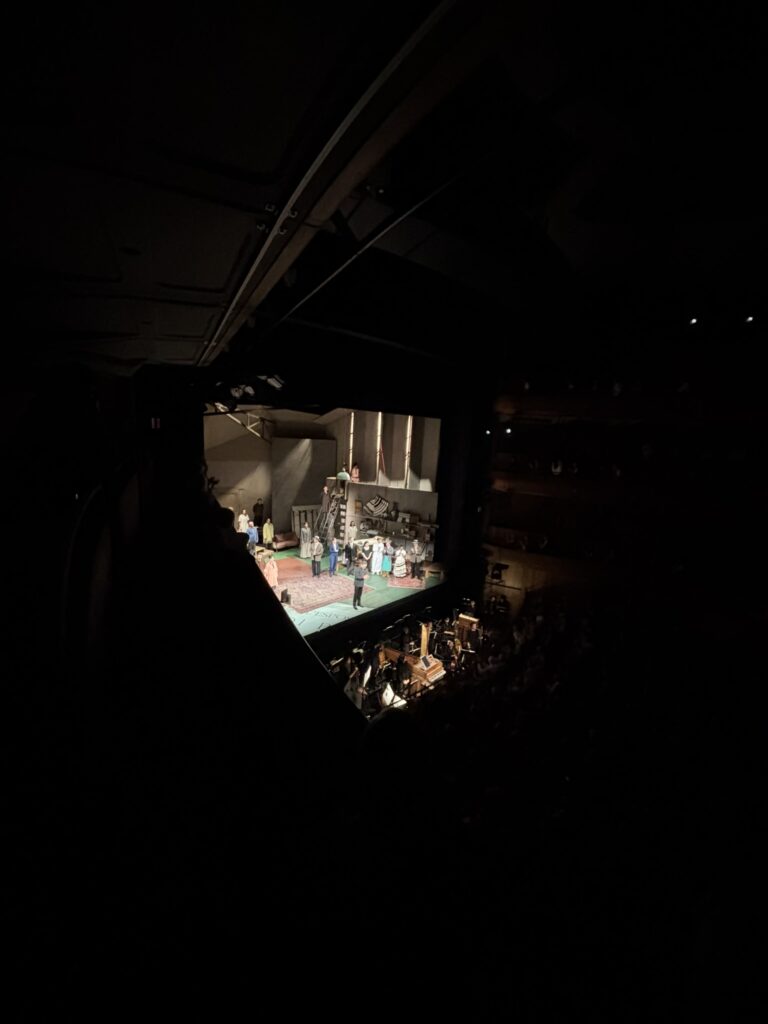
Also, in the auditorium, my seats were on the side, in the third circle, giving me a side view of the stage.
Somehow, the stage was luminous from there, surrounded by all this darkness.
It was very similar, somehow, to the view you get from these thickets in the garden, through which you can suddenly see another landscape or another subject.
The birds
The birds became important quite quickly.
The woodpeckers are a little homage to all the makers at Glyndebourne, and especially to the carpenters and the people working in the workshops. There is something very appropriate about the woodpecker: constantly working away at the tree, making something, building something.
The robins are a homage to all the performers, and especially to the soprano singers that we all love.
I like the idea that these birds are not simply decorative Christmas birds. They have a relationship with Glyndebourne and with the people who make Glyndebourne happen.
The garden becomes a stage, and the birds become performers and makers.
And perhaps this is where the connection between Christmas and Glyndebourne becomes more interesting for me
Why Christmas cards?
Christmas cards are a complex thing. They are small objects, but they carry a lot of meaning.
In 2021 I saw an exhibition about artist-designed Christmas cards at Pallant House Gallery in Chichester. It was in the Print Room display featuring more than 100 original Christmas cards, dating from the 1950s to the present day. There were cards by some extraordinary British artists, including Edward Bawden, Glenn Brown, Barnett Freedman, Nigel Henderson, Enid Marx, Ben Nicholson and Glyn Philpot.
Christmas cards are actually a British invention. The first Christmas card is believed to have been commissioned in 1843 by Henry Cole, who was one of the founding directors of the V&A, together with the artist John Horsley. The idea was partly to encourage ordinary people to use the newly formed postal service to keep in touch with friends and family.
My own Christmas cards
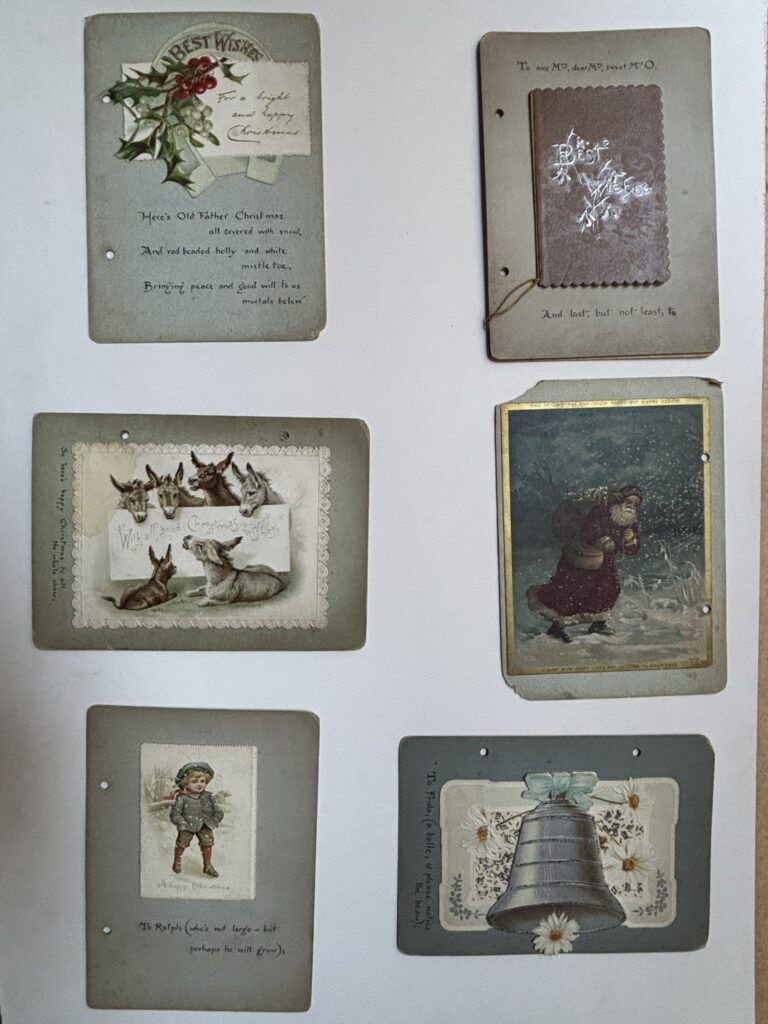
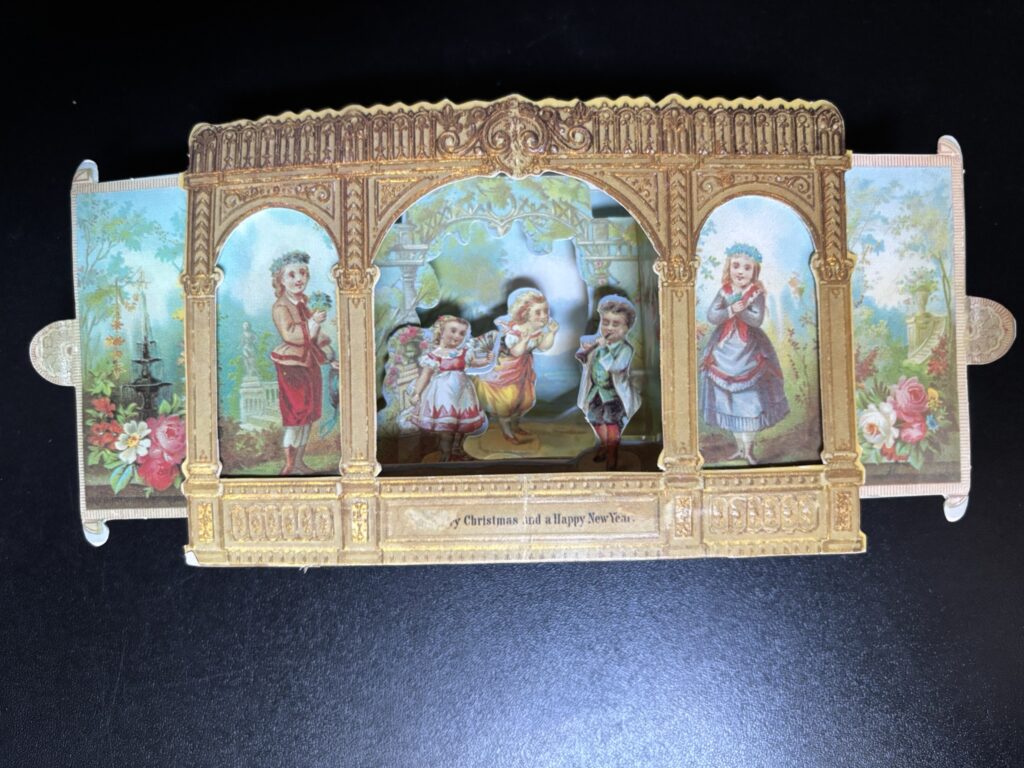
At home I have my own little collection of antique Christmas cards.
Some of the cards in my collection are approximately 120 to 150 years old, dating from the late Victorian and early Edwardian period, roughly from the 1870s to the 1900s.
The heavy cardstock, the muted colours, the chromolithographic printing, the decorative die-cut shapes and the typography all give them a very particular character.
Some even have handwritten words and little references to a “belle” and a “beau”, which make them feel almost like tiny theatre sets or little romantic objects.
There are Old Father Christmas figures in traditional green and crimson robes, sprigs of holly, winter landscapes covered in snow and wonderfully strange anthropomorphic animals.
Bringing nature indoors
There is something else that a Christmas card can do which I really like. It can be a reminder of our connection to nature. At Christmas, we bring nature indoors, at precisely the time of year when outside it is cold and dark. We bring in branches, holly, berries, trees and leaves. We decorate our homes with things that come from outside. And look at how the birds appear. They are always in the thicket, protected from the elements. They are tucked into the branches, surrounded by berries and leaves.
The opera and the thicket
There may also be a relationship between these cards and the opera itself. I keep thinking about Ariadne auf Naxos and the position I had in the auditorium. I was sitting at the back, in the upper circle, quite far away from the stage. From there, the stage was luminous and brilliant and dazzling. But it was surrounded by darkness. The outlines of the heads of the audience, the seats, the dark auditorium — all of this surrounded the light of the stage. And somehow, this is very similar to the idea I was developing in the garden. You look through the thicket and suddenly you see something luminous. Something appears through the branches, and for a moment it becomes the focus. But it is surrounded by darkness. The thicket frames the view in the same way that the darkness of the auditorium framed the stage. Perhaps I didn’t consciously realise this when I was sitting there watching the opera. But looking back at it now, I think the two things are connected. The stage becomes a landscape. The landscape becomes a stage. And the Christmas card becomes another little window through which you can look into it.