
Interview with Dee Ferris for Artist Open Houses Festival Winter 2026
For your Open House this year you are producing a series of prints with a distinctly wintery flavour. Can you tell us a bit about where the idea came from?
Every year, I enjoy putting together a Christmas design, often combining traditional elements with pagan imagery and folklore. This year was special, as Glyndebourne commissioned me in August to design their Christmas cards for the season, which meant much more thinking and planning ahead.
The commission was successful, and Glyndebourne bought the rights to the designs, which was superb, but it also left me with a strong creative inertia.
Earlier in the year, I had some informal conversations with the Royal Pavilion about creating a Christmas design for them too. So, once the Glyndebourne commission was completed, with my head steaming with ideas, I went on to create a new and very different collection of designs for the Royal Pavilion. This was successful too, and the designs are now available as Christmas cards in their beautiful shop.
This time, however, I retained ownership of the designs and thought it would be a lovely opportunity to make them the main theme of my Winter Artists Open Houses 2026 festival.
Artist’s Christmas cards design in Britain has a long tradition. In 2021 I saw an exhibition about artist-designed Christmas cards at Pallant House Gallery in Chichester. It was in the Print Room display featuring more than 100 original Christmas cards, dating from the 1950s to the present day. There were cards by some extraordinary British artists, including Edward Bawden, Glenn Brown, Barnett Freedman, Nigel Henderson, Enid Marx, Ben Nicholson and Glyn Philpot.
Also, about six years ago, I visited the Jardin Majorelle in Marrakech, where a room exhibited the celebrated Yves Saint Laurent’s famous New Year tradition: creating handcrafted “LOVE” greeting cards, which he sent to close friends, models, collaborators and clients every year from 1970 to 2007.
Christmas cards are actually a British invention. The first Christmas card is believed to have been commissioned in 1843 by Henry Cole, who was one of the founding directors of the V&A, together with the artist John Horsley. The idea was partly to encourage ordinary people to use the newly formed postal service to keep in touch with friends and family.
The title of your Open House, Winter Chronicles, is a very inviting one and evokes the longstanding tradition of sharing ancient tales during the darkest months. Was this something you had in mind when you set out to create this series?
I love the Artists Open Houses festival. Lots of people come through your door, and I particularly love it when families visit with their little ones. I often keep them entertained by asking them to count the dragons in my prints. Some children have a genuine curiosity and an extraordinary capacity for wonder. I feel both humble and proud when my work is understood and cherished by these very young visitors.
In a way, I have created this work with them in mind. The birds, trees and magical architecture of the Royal Pavilion come together to create a scene that could have stepped straight out of a fairy tale.
That is also why I have written an evocative introduction to the collection, much like the opening words of a theatrical performance, inviting us into an imaginary world.
All gather and listen and see
these new winter stories of old.
The coldest season, with the longest nights,
invites us to gather around warm comforts,
to relish in the contemplation of tales, real or imaginary,
of people, places and events,
for your delight and delectation.

The garden and architecture of the Royal Pavilion form the basis of these new works, and ties in very nicely again with the idea of wintertide storytelling – often hosted in historic properties and museums. Can you explain a little bit why it holds such fascination for you, especially in the context of your Christmas designs?
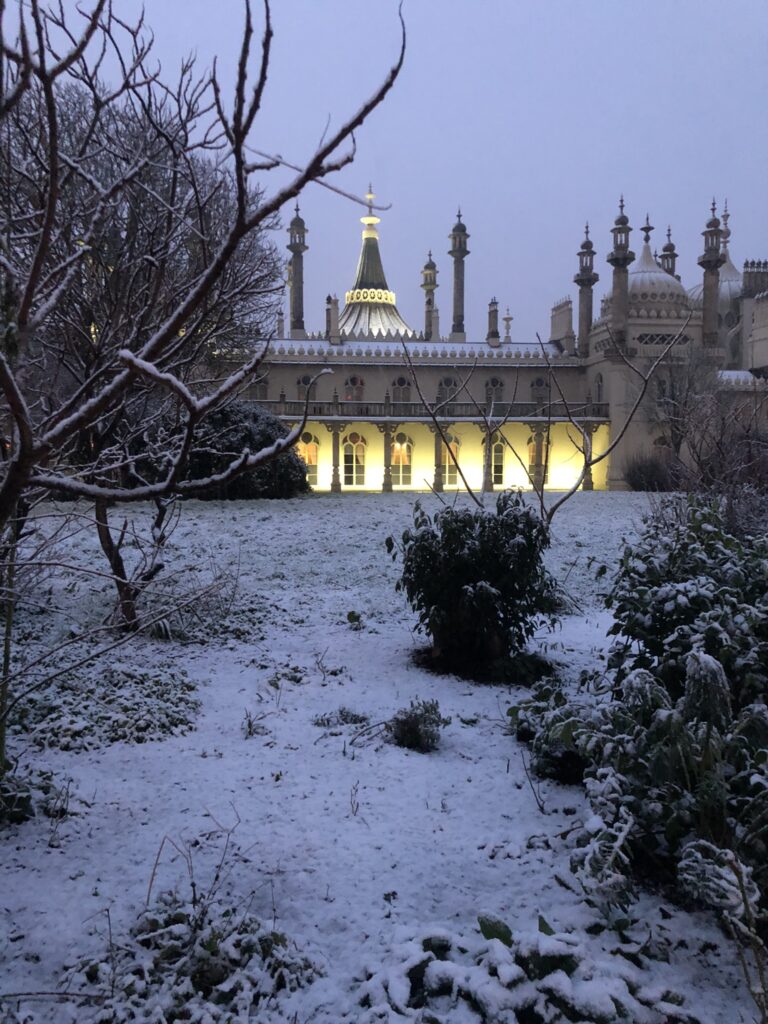
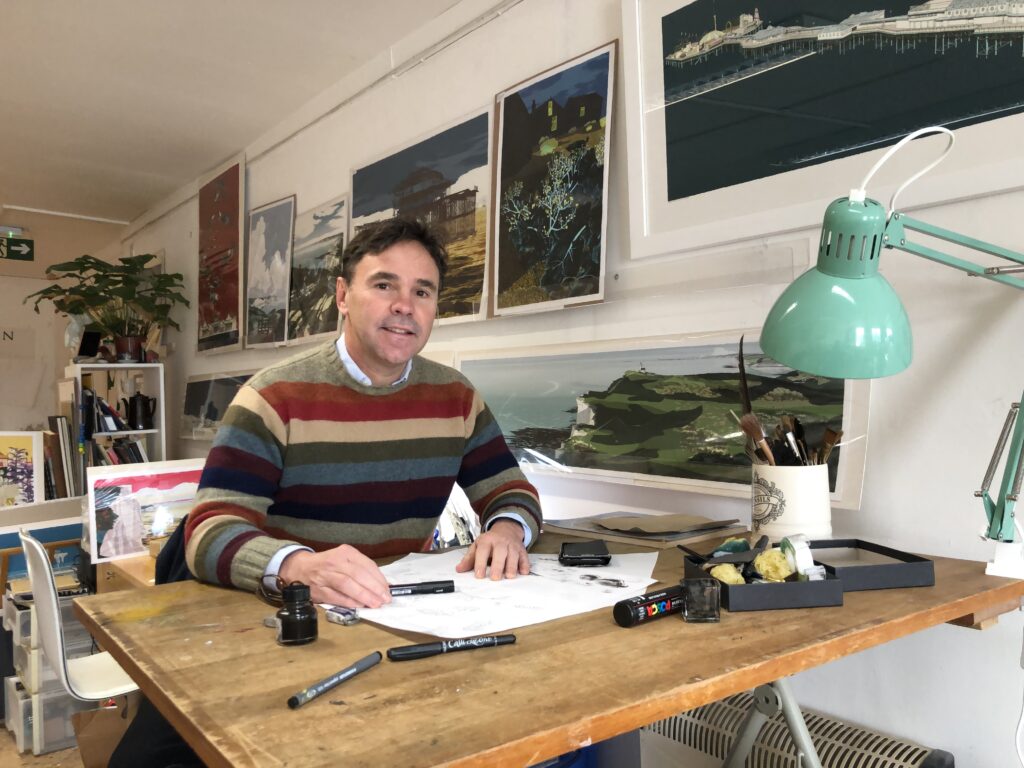
On Sunday 11 December 2022, we had heavy snowfall in Brighton. I was in my studio watching the snow falling over the rooftops of the Dome and the Royal Pavilion, both of which I can see from my studio balcony.
I decided to go for a walk around the Pavilion Gardens. It was so quiet. You know how snow muffles every sound? The light was also dimmed and grey, there was nobody else around, and in the silence, the birds came out to enjoy themselves.
It was a true winter scene, everything covered in white. That image stayed with me.
Somehow, this series is a magical recollection of that walk around the Pavilion Gardens, seeing the whimsical architecture of the Royal Pavilion through the thickets of hawthorn and holly, surrounded by birds.
Your delight in pattern and decoration is very evident in these works. Were you inspired by anything in particular?
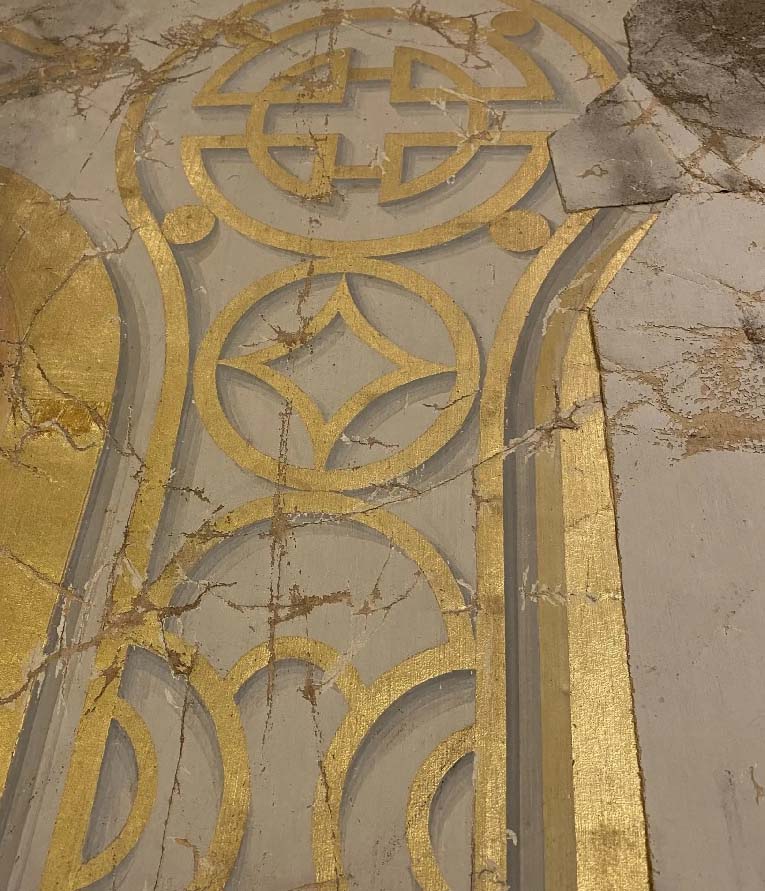
My designs echo the interiors of the Royal Pavilion, with their beautiful painted wallpapers incorporating architecture, trees and animal subjects. For the sky, I have also created my own Chinoiserie-inspired pattern, using fragments from the original 1821–22 decorations of the Royal Pavilion.
Adding a patterned sky transforms the scene into something resembling a wallpaper design, strengthening the ideas of illusion, illustration and storytelling.
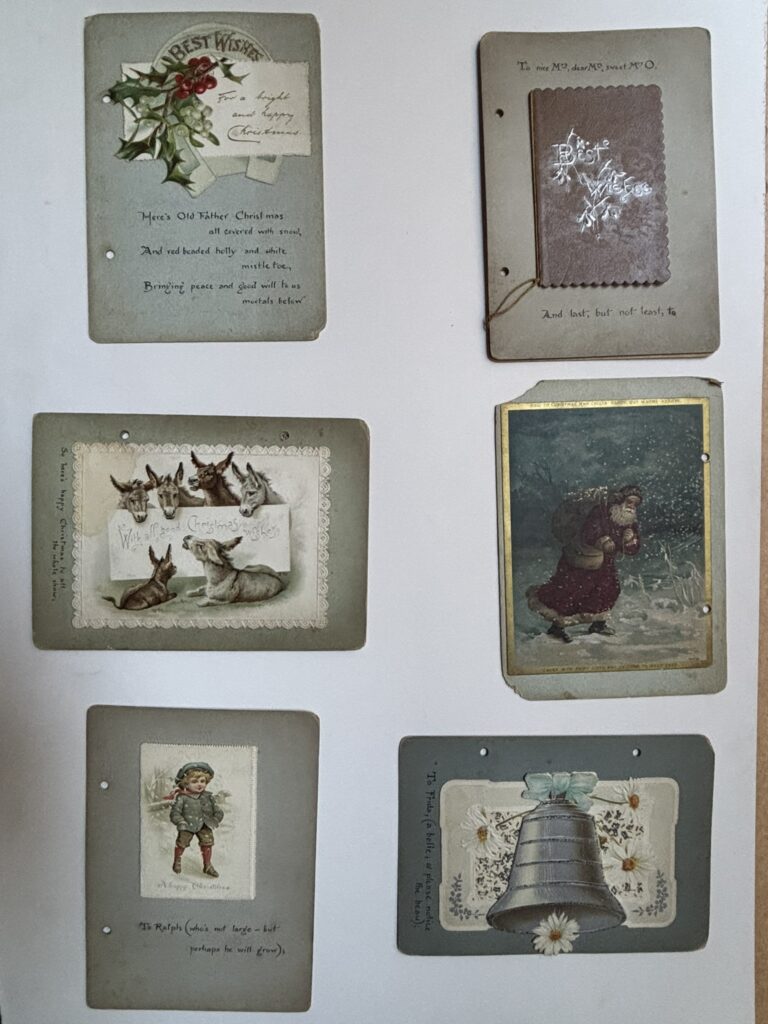
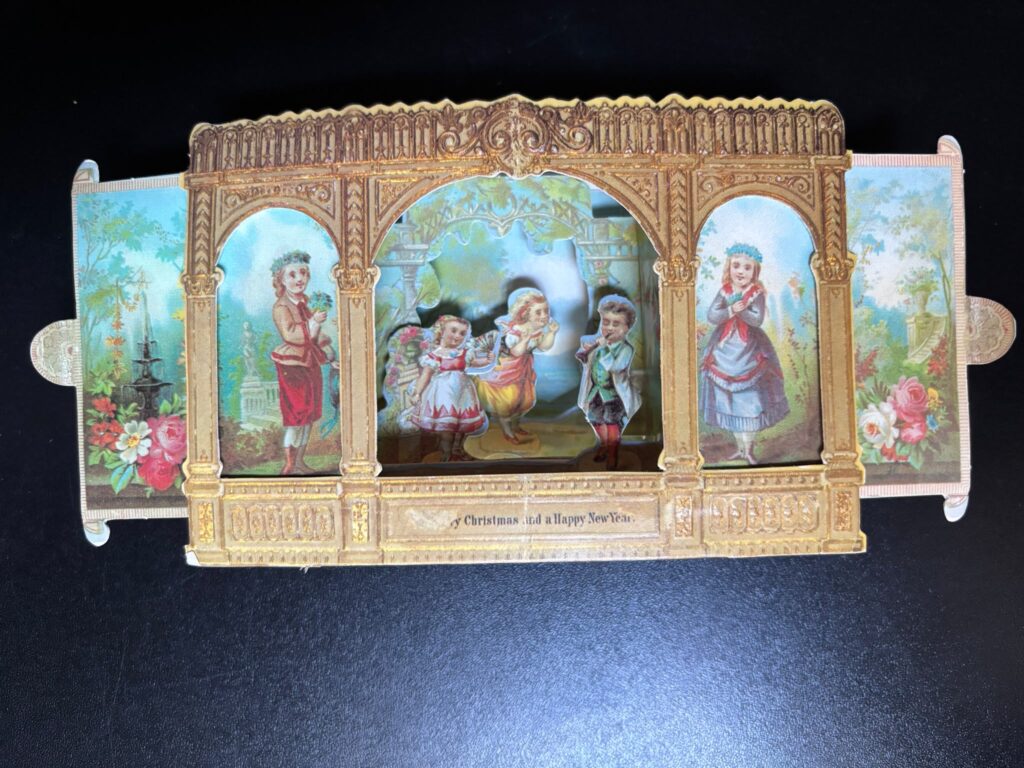
I have so many artistic references. A friend of mine gifted me his collection of traditional historic Christmas designs, opening up a beautiful, distinctive and rather sentimental world of illustration.
Earlier this year, I visited the British Museum exhibition Hiroshige: Artist of the Open Road. I was particularly drawn to his landscapes and his extraordinary bird-and-flower prints.
Hiroshige had a remarkable ability to create a sense of place through composition. He often used unexpected viewpoints, a cropped branch or tree in the foreground, distant landscapes and figures moving through the scene. The result can feel almost like looking into a particular moment rather than simply looking at a picture of a landscape.
His use of nature is particularly important to me. Birds, trees, flowers, weather and changing light are not simply decorations; they help create the atmosphere and structure of the image.
I also love the way he could combine a strong graphic composition with a feeling of tranquillity.
Eric Slater (1896–1963) is another important reference for me. A Sussex printmaker who lived in Seaford for more than thirty years, he produced around forty colour woodcuts of the Sussex landscape, including Seaford Head and Newhaven.
His work was strongly influenced by Japanese colour woodblock printing, particularly the work of Hokusai.
I love the idea that you are offering a warm space of contemplation, especially in these dark and long nights. Is this an important motivation in making art for you?
You are likely to find me swimming in the sea during the summertime, but winter is a different story. During the long nights and colder days, I love spending time in my studio working, or at home reading, writing, cooking and resting. There is something comforting about being sheltered from the harsh weather, either enjoying my own company or sharing time with friends. It is a time for contemplation, of art and of life.
Prints in this series
-
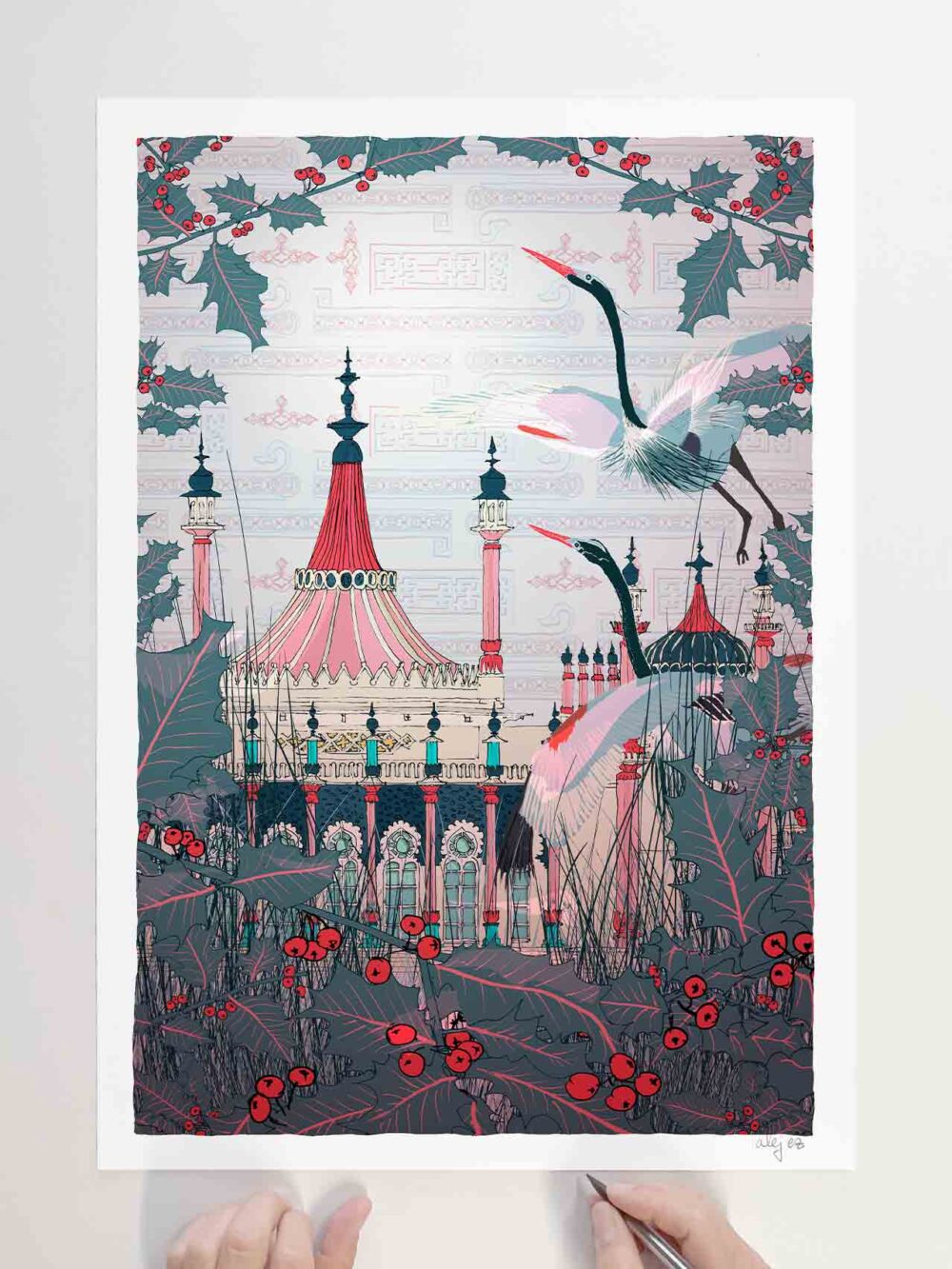
Herons at the Royal Pavilion Garden Brighton in Winter
Price range: £40.00 through £310.00 Select options This product has multiple variants. The options may be chosen on the product page -
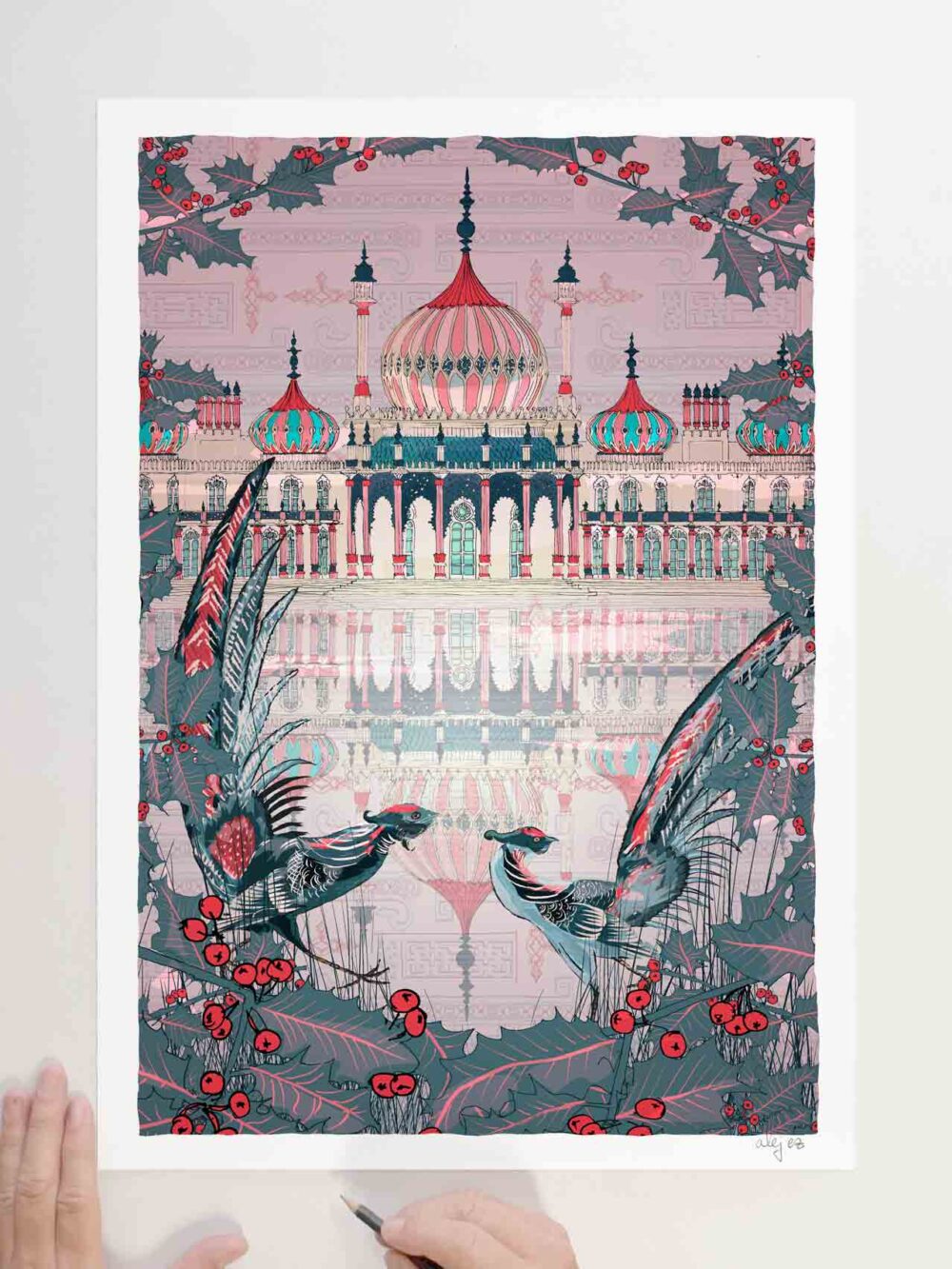
Pheasants at the Royal Pavilion Garden Brighton in Winter
Price range: £40.00 through £310.00 Select options This product has multiple variants. The options may be chosen on the product page -
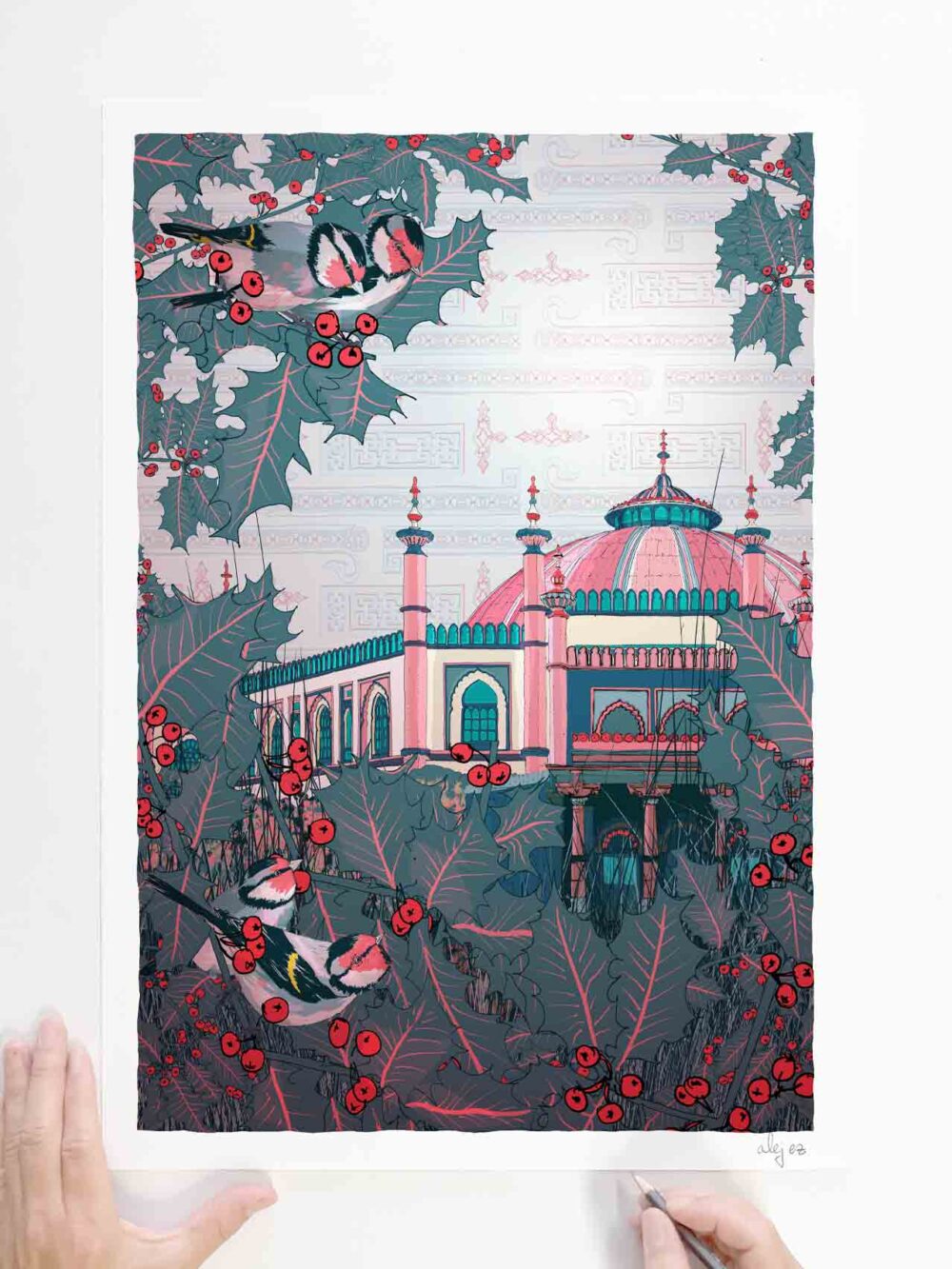
Goldfinches at the Royal Pavilion Garden Brighton in Winter
Price range: £40.00 through £310.00 Select options This product has multiple variants. The options may be chosen on the product page -
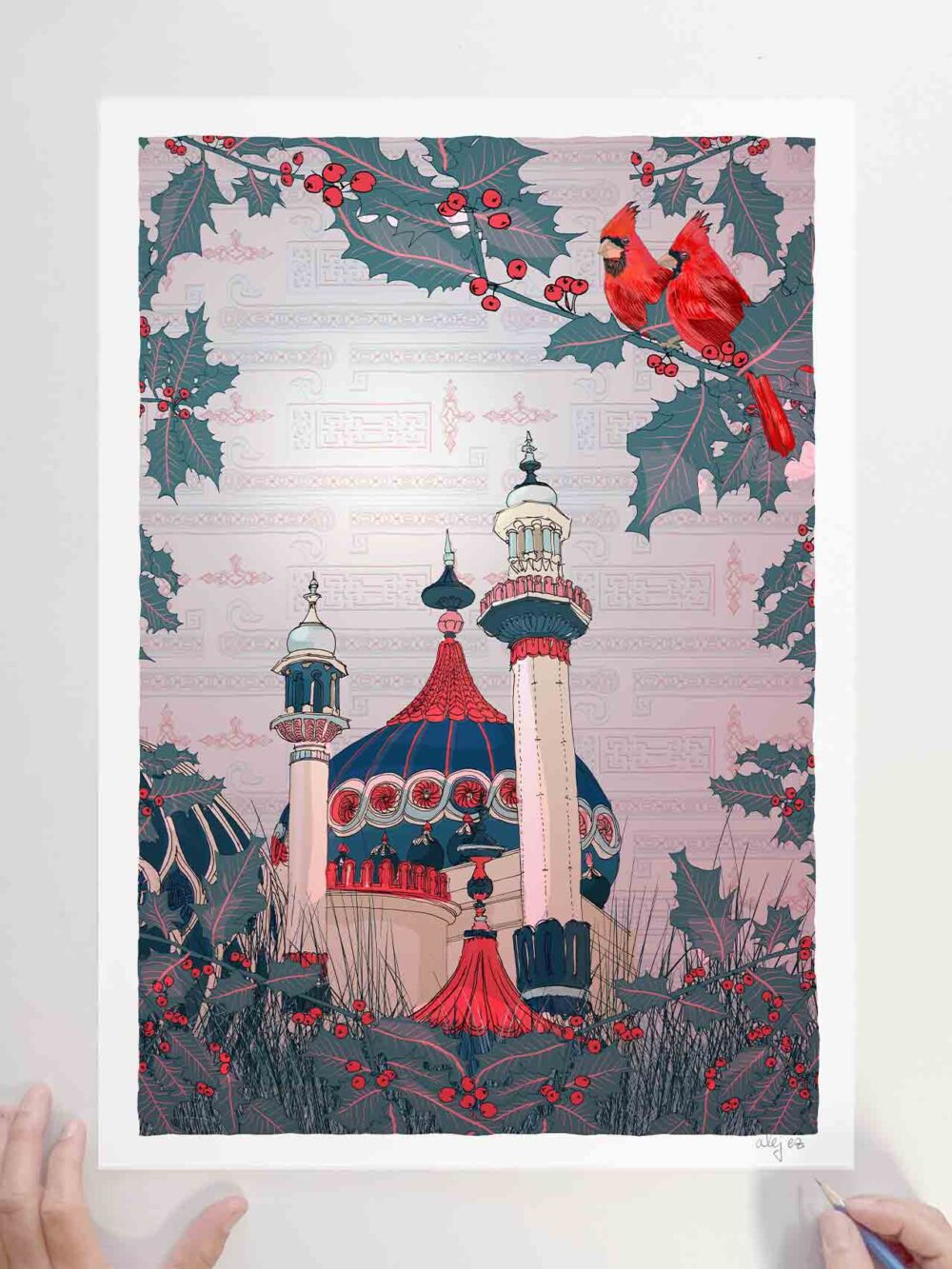
Cardinals at the Royal Pavilion Garden Brighton in Winter
Price range: £40.00 through £310.00 Select options This product has multiple variants. The options may be chosen on the product page